Overview
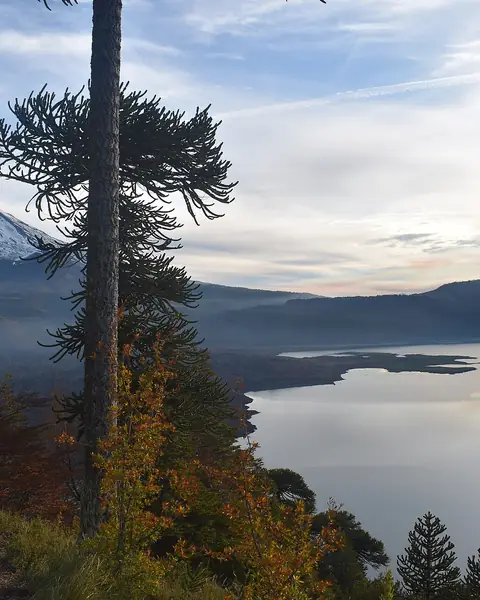
Conguillío National Park is one of Chile's oldest parks, a landscape shaped by the Llaima volcano, one of the most active in the country. Dark lava flows run into forests of araucaria, the monkey-puzzle trees that can live for over a thousand years, and Lake Conguillío lies at the heart of the park.
Trails range from short walks to the lake edge and through the Sierra Nevada forest, to long hikes around the volcano. Facilities include basic campsites and cabins near the lake, and the road in from Melipeuco or Curacautín is rough in places. It is less visited than Pucón, with a quieter, wild feel.
Highlights
- Araucaria forests along the Sierra Nevada trail
- Lake Conguillío and the Llaima volcano above it
- Lava fields and the Truful-Truful valley
- Quiet campsites and cabins in the forest
Best time to visit
December to March is the main season, when roads and trails are open and the weather is warm. Autumn brings colour in the southern beech forests. Winter snow can close roads and trails.
- JanJanuary: Best
- FebFebruary: Best
- MarMarch: Best
- AprApril: Good
- MayMay: Not ideal
- JunJune: Not ideal
- JulJuly: Not ideal
- AugAugust: Not ideal
- SepSeptember: Not ideal
- OctOctober: Not ideal
- NovNovember: Good
- DecDecember: Best
● Best · ○ Good · blank: not ideal. Conditions vary by year, so check local forecasts and access before you go.
Getting there
Fly to Santiago (SCL), then to Temuco (ZCO), and drive about two hours to the park entrance at Melipeuco, or via Curacautín. A car is the best way to explore, though shuttle tours run in summer. The park has an entry fee and conditions can change after eruptions.
What to expect
Moderate. Most walks are on clear paths, with some steady climbs. Volcanic activity can close sectors of the park, so check with CONAF. Services in the park are basic.
Practical tips
- Check with CONAF for current park access and volcano alerts.
- Book park cabins or campsites in advance for summer.
- Carry your own food and water, as supplies are limited.
- Stay on trails to protect the araucaria roots.
Frequently asked questions
Why are the araucarias special?
They are long-lived trees found only in this part of the Andes, sometimes called monkey-puzzle trees, and they can live more than a thousand years.
Is the park open all year?
Parts close in winter because of snow. Summer is the most reliable.
Is the volcano dangerous?
Llaima is active, and access can change. Check alerts and follow park staff guidance.
Official sources
Rules, fees, permits and conditions change. Check the official pages below before you travel.
- Chile Travel, the official tourism website
- CONAF, Chile's national parks agency
- UK government travel advice: Chile
Last reviewed October 2026. Details are for planning only and can change; confirm access, permits and conditions with official sources before you travel. Spotted something out of date? Tell us. Photography: Delahimalaya-alosandes (CC BY-SA 4.0) via Wikimedia Commons.


