Skip to content
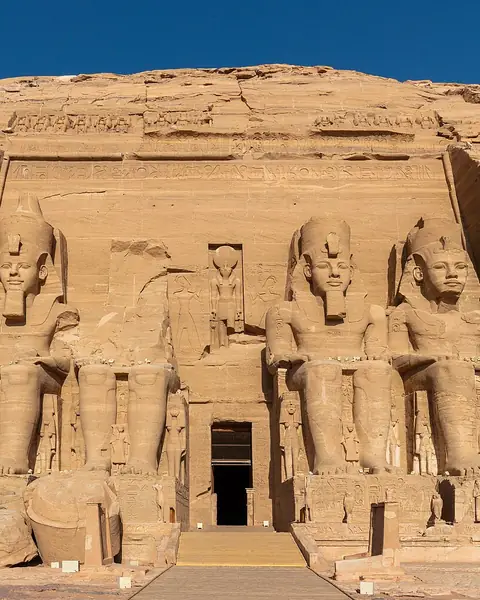
The rock-cut facade of the Great Temple of Abu Simbel

Abu Simbel, Aswan

Abu Simbel

Two huge rock-cut temples guarded by four colossal statues of Ramesses II, on the shore of Lake Nasser.

Altitude
180 m
Best months
Oct–Apr
Level
Moderate
Fly into
Aswan (ASW)

Overview

Abu Simbel, in the far south of Egypt near the Sudanese border, is one of the great monuments of the ancient world. Ramesses II had two temples cut into a sandstone cliff about 3,200 years ago: the Great Temple, fronted by four seated statues of the pharaoh, each about 20 m high, and a smaller temple for his queen Nefertari. They were built to impress the Nubians to the south and to glorify the king.

When the Aswan High Dam threatened to flood the site, the temples were cut into blocks and rebuilt on higher ground in the 1960s, in one of the great engineering rescues of heritage. Twice a year, around 22 February and 22 October, the sun shines along the temple axis into the inner sanctuary and lights up the statues, an event that draws large crowds. The site is a long way from other sights, so many visitors fly in for the day from Aswan.

Highlights

  • The four colossal statues of Ramesses II
  • The inner sanctuary and the sun festivals
  • The temple of Nefertari
  • Lake Nasser and the desert views

Best time to visit

October to April is the best time. Summers are extremely hot. The sun festival days of 22 February and 22 October are very crowded and need advance planning, but the site is open all year.

  1. JanJanuary: Best
  2. FebFebruary: Best
  3. MarMarch: Best
  4. AprApril: Good
  5. MayMay: Not ideal
  6. JunJune: Not ideal
  7. JulJuly: Not ideal
  8. AugAugust: Not ideal
  9. SepSeptember: Good
  10. OctOctober: Best
  11. NovNovember: Best
  12. DecDecember: Best

● Best · ○ Good · blank: not ideal. Conditions vary by year, so check local forecasts and access before you go.

Getting there

From Aswan (ASW), either take a flight of about 45 minutes or a road convoy, about 3 hours each way, 280 km south through the desert, usually starting before dawn. Tours from Aswan include transport. A few visitors stay at Abu Simbel or arrive by Lake Nasser cruise.

What to expect

A visit takes about two hours, and the site is open and sunny. Tickets cost more for foreigners, and photography is not allowed inside the temples. Early morning is the best time, before the tour buses arrive. Check the travel advisories for the region.

Practical tips

  • Go with an organised tour or a trusted driver, and check convoy times.
  • Arrive early to see the temple before the crowds.
  • Bring water, a hat and sun protection.
  • Check the latest travel advice for the south of Egypt.

Frequently asked questions

Why were the temples moved?

The Aswan High Dam flooded the area, so they were cut into blocks and rebuilt on higher ground in the 1960s.

When is the sun festival?

Around 22 February and 22 October, when the sun reaches the inner sanctuary.

How far is Abu Simbel from Aswan?

About 280 km, around 3 hours by road or 45 minutes by air.

Official sources

Rules, fees, permits and conditions change. Check the official pages below before you travel.

Photos
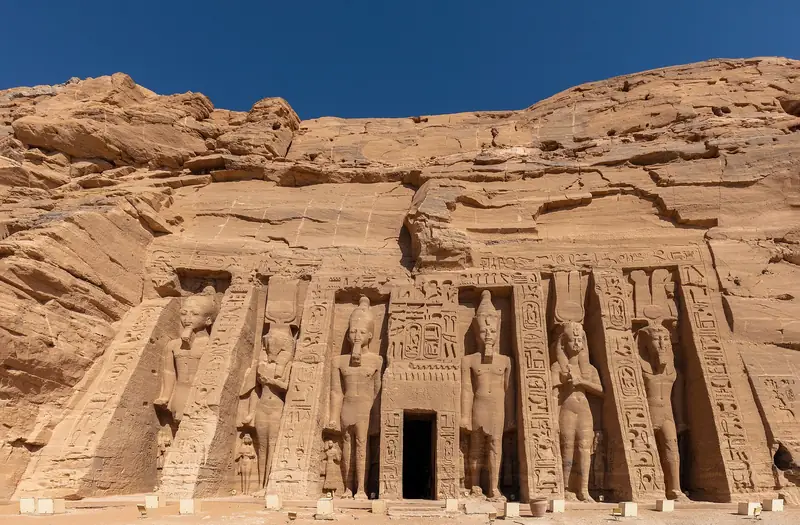
The facade of the smaller temple of Nefertari at Abu Simbel
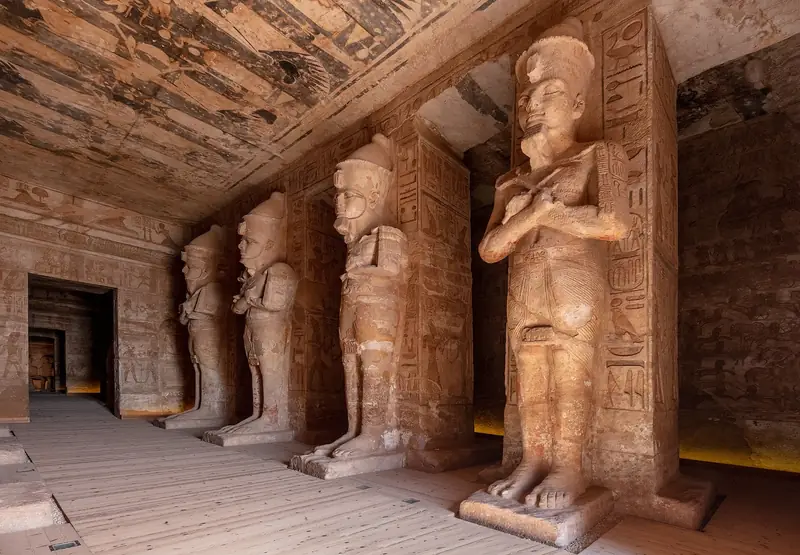
Colossal statues of Ramesses II in the hall of the Great Temple

Last reviewed October 2026. Details are for planning only and can change; confirm access, permits and conditions with official sources before you travel. Spotted something out of date? Tell us. Photography: Diego Delso (CC BY-SA 4.0) via Wikimedia Commons, Diego Delso (CC BY-SA 4.0) via Wikimedia Commons, Diego Delso (CC BY-SA 4.0) via Wikimedia Commons.

Where to stay

Where to stay in Abu Simbel

Hotels in Abu Simbel are coming soon

We are adding the hotels, guesthouses and lodges that local owners register with us. Each one is reviewed before it appears here. Meanwhile, you can compare stays on our partner sites.

List your hotel Compare stays (opens a partner site in a new tab)

More in Egypt

Keep exploring Egypt

The pylons of the Temple of Isis at Philae seen across the water

Agilkia Island, Aswan

Philae Temple

A graceful temple of the goddess Isis on an island in the Nile, rescued from the rising waters of the Aswan dams.

110 m · Oct–Apr · Easy

Good for: History & ruins · Scenic views

Feluccas sailing on the Nile at Aswan below the city

Nile city, Aswan

Aswan and the Nile

The sunny southern city on the Nile, with feluccas, granite islands, markets and colourful Nubian villages.

90 m · Oct–Apr · Easy

Good for: Scenic views · Villages & culture

The colonnaded front of the temple of Kom Ombo

Kom Ombo, Aswan

Kom Ombo Temple

A Ptolemaic double temple on a bend of the Nile, shared by the crocodile god Sobek and the falcon god Haroeris.

90 m · Oct–Apr · Easy

Good for: History & ruins · Scenic views

The great pylon of the Temple of Horus at Edfu

Edfu, Aswan

Edfu Temple of Horus

The best-preserved major temple in Egypt, a huge Ptolemaic temple of the falcon god Horus.

90 m · Oct–Apr · Easy

Good for: History & ruins · Villages & culture

The floodlit pylon and obelisk of Luxor Temple at night

East Bank, Luxor

Luxor Temple

A temple on the Nile bank in the middle of Luxor, beautiful at sunset and floodlit at night.

80 m · Oct–Apr · Easy

Good for: History & ruins · Villages & culture

The avenue of ram-headed sphinxes at Karnak

Karnak, Luxor

Karnak Temple

The largest ancient religious complex in the world, with a forest of giant columns in the Hypostyle Hall.

80 m · Oct–Apr · Easy

Good for: History & ruins · Villages & culture

The terraces and ramp of the Temple of Hatshepsut below the cliffs

Deir el-Bahari, Luxor

Temple of Hatshepsut

The terraced mortuary temple of Egypt's great woman pharaoh, set against a bowl of pale cliffs.

100 m · Oct–Apr · Easy

Good for: History & ruins · Desert & dunes

The painted corridor of a royal tomb in the Valley of the Kings

West Bank, Luxor

Valley of the Kings

The hidden valley where pharaohs of the New Kingdom were buried, with painted tombs cut deep into the rock.

150 m · Oct–Apr · Easy

Good for: History & ruins · Desert & dunes

The columned front of the Temple of Hathor at Dendera

Dendera, Luxor

Dendera Temple Complex

A beautifully preserved temple of the goddess Hathor, known for its zodiac ceiling and roof stairs.

80 m · Oct–Apr · Easy

Good for: History & ruins · Villages & culture

A dugong grazing on sea grass off Marsa Alam

Marsa Alam, Red Sea

Marsa Alam

A quieter southern stretch of the Red Sea coast with turtles, dugongs and some of the best snorkelling in Egypt.

5 m · Oct–Apr · Easy

Good for: Beaches & coast · Scenic views

A yacht and a palm-fringed beach resort in Hurghada

Hurghada, Red Sea

Hurghada and the Giftun Islands

A long strip of Red Sea beach resorts, with coral islands offshore, desert hills behind and diving all year.

10 m · Oct–Apr · Easy

Good for: Beaches & coast · Cities & landmarks

Kitesurfing kites and boards on the beach at El Gouna

El Gouna, Red Sea

El Gouna

A planned resort town of lagoons, islands and low-rise white buildings, with kitesurfing and a relaxed, upmarket mood.

5 m · Oct–Apr · Easy

Good for: Beaches & coast · Cities & landmarks

See all 30 places in Egypt

Plan your trip

Everything you need for Egypt

These links open partner sites in a new tab. Prices and availability are set by the partners.

Bookings are coming soon. Reserve guided trips directly on LuxPines.

Join the waitlist