Overview
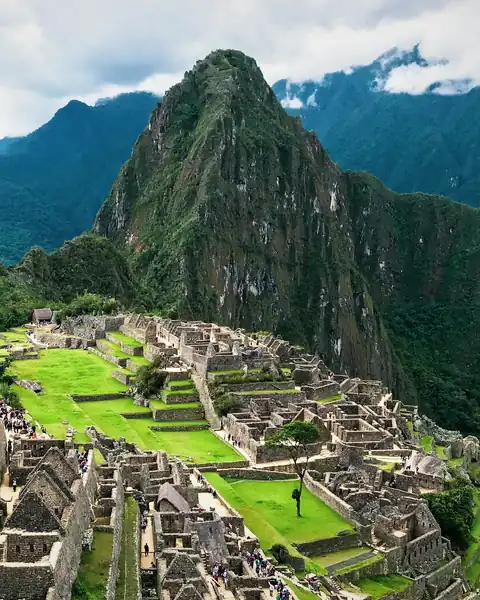
Machu Picchu is an Inca citadel of stone terraces, temples and plazas set on a ridge at about 2,430 m, between the peaks of Machu Picchu and Huayna Picchu above the Urubamba River. Built in the 15th century, it is a UNESCO World Heritage Site and one of the most visited places in South America.
Most visitors travel by train from Cusco or Ollantaytambo to Aguas Calientes (officially Machu Picchu Pueblo), then take a bus up to the entrance. Others arrive on foot, on the classic four-day Inca Trail of about 43 km, or on alternative treks such as Salkantay. Entry tickets are timed and limited, and the climbs of Huayna Picchu and Machu Picchu Mountain need their own tickets.
Highlights
- The classic view of the citadel from the upper terraces
- Huayna Picchu (about 2,720 m) and Machu Picchu Mountain (about 3,080 m), steep climbs that need extra tickets
- The four-day Inca Trail, which needs a permit booked through a licensed operator
- The Sacred Valley, with the Inca sites of Ollantaytambo, Pisac and Moray
Best time to visit
The dry season, from May to September, has the clearest skies and the most reliable trail conditions, and it is also the busiest. April and October are good compromises. The wet season runs roughly from November to March and is heaviest in January and February: some mornings are cloudy, trails can be slippery, and the Inca Trail closes every February for maintenance.
- JanJanuary: Not ideal
- FebFebruary: Not ideal
- MarMarch: Not ideal
- AprApril: Good
- MayMay: Best
- JunJune: Best
- JulJuly: Best
- AugAugust: Best
- SepSeptember: Best
- OctOctober: Good
- NovNovember: Not ideal
- DecDecember: Not ideal
● Best · ○ Good · blank: not ideal. Conditions vary by year, so check local forecasts and access before you go.
Getting there
Fly to Cusco (CUZ), usually via Lima (LIM). From the Cusco area, trains run from Poroy or Ollantaytambo to Aguas Calientes in roughly 1.5 to 4 hours, depending on the starting station and train, followed by a bus of about 25 minutes to the entrance. Book trains and entry tickets as early as you can, especially from May to September.
What to expect
Easy to moderate on foot, but with a lot of steps, and the altitude and the sun catch some visitors out. Timed entry sets a route through the site, so allow at least half a day. Cusco is higher than the citadel, so give yourself a day or two to adjust there or in the Sacred Valley before any hikes.
Practical tips
- Buy tickets only through the official Ministry of Culture ticket office, as resellers often add fees.
- Acclimatise: spend a day or two in the Sacred Valley (about 2,800 m) before heading to Cusco or the Inca Trail.
- Carry your passport (it is checked at entry), a rain jacket, insect repellent and sun protection.
- Site rules limit bag sizes and ban items such as tripods and drones; check the list when you buy your ticket.
Frequently asked questions
Do I need to book Machu Picchu in advance?
Yes. Entry is by timed ticket with limited daily numbers, and the busiest slots and the extra mountain climbs often sell out weeks or months ahead.
How do I avoid altitude sickness?
Cusco is at about 3,400 m. Arrive a day or two early, or go first to the lower Sacred Valley, take it easy, drink water and avoid heavy alcohol. See a doctor or travel clinic before you go. Machu Picchu itself is lower, at around 2,430 m.
Can I visit Machu Picchu as a day trip from Cusco?
Yes, by train and bus, but it is a long day. Many people prefer to stay a night in Aguas Calientes or take an early train and enter in the morning.
Official sources
Rules, fees, permits and conditions change. Check the official pages below before you travel.
- Official Machu Picchu website
- Ministry of Culture ticket office
- PromPerú, the official tourism website
- UK government travel advice: Peru
Photos

Last reviewed October 2026. Details are for planning only and can change; confirm access, permits and conditions with official sources before you travel. Spotted something out of date? Tell us. Photography: Eddie Kiszka on Unsplash, Willian Justen de Vasconcellos on Unsplash.


