Overview
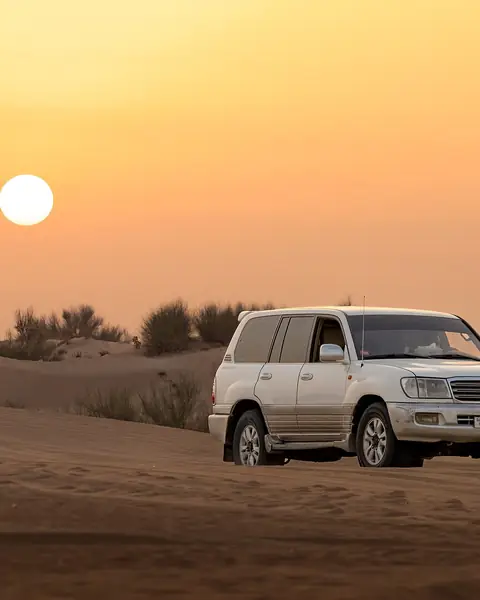
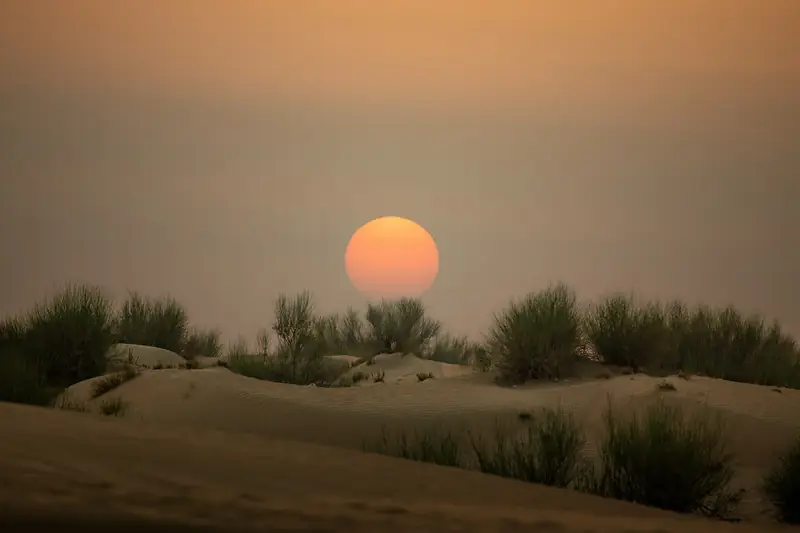
Outside the city, within an hour's drive, the land turns to red-gold sand dunes, ghaf trees and open gravel plains. Much of it is protected as part of the Dubai Desert Conservation Reserve and the Al Marmoom reserve, where Arabian oryx, gazelles and many birds live. The dunes change colour with the light, from pale pink at dawn to deep red at sunset.
Most visitors join an organised safari: a drive over the dunes in a four-wheel-drive vehicle, a stop for sunset photographs, a camel ride and an evening at a camp with a barbecue, music and tea. Quieter options include a sunrise hot-air balloon flight, a walk with a guide, stargazing, and stays in desert resorts. Choose a responsible operator that keeps to marked tracks and treats animals well.
Highlights
- Sunset over the red-gold dunes
- A camel ride and an evening at a desert camp
- A hot-air balloon flight at sunrise
- Wildlife such as oryx, gazelles and desert birds
Best time to visit
November to March is the best time, with warm days and cool nights. April and October are acceptable, though hot. From May to September, daytime heat is extreme and desert trips are limited to early morning and after dark.
- JanJanuary: Best
- FebFebruary: Best
- MarMarch: Best
- AprApril: Good
- MayMay: Not ideal
- JunJune: Not ideal
- JulJuly: Not ideal
- AugAugust: Not ideal
- SepSeptember: Not ideal
- OctOctober: Good
- NovNovember: Best
- DecDecember: Best
● Best · ○ Good · blank: not ideal. Conditions vary by year, so check local forecasts and access before you go.
Getting there
Fly to Dubai (DXB). Most operators collect guests from hotels, with a drive of 45 to 60 minutes into the desert. A few desert resorts and conservation reserves can be reached by private car and have their own transfers. Book in advance for sunrise flights and overnight stays.
What to expect
Safaris are a mix of adventure and comfort: dune driving can be bumpy and may not suit anyone with back problems or motion sickness. Camps are set up for tourists, with prayer-style seating, shows and meals. Nights can be cool in winter, so bring a layer.
Practical tips
- Choose an operator that keeps to marked tracks and respects wildlife and the reserve rules.
- Wear light clothes, a hat and sun cream by day, and a warm layer in the evening.
- Tell the operator about health issues before dune driving, and avoid it if pregnant.
- Drink plenty of water, and do not leave the camp or tracks on your own.
Frequently asked questions
Is a desert safari worth it?
Yes, for most visitors it is one of the best experiences near Dubai. Choose a reputable operator and a smaller group if you want a quieter trip.
Can I see wild animals?
Possibly: oryx, gazelles, desert foxes and many birds live in the reserves. Sightings are most likely at dawn or dusk with a guide.
Is it safe?
Safaris are widely run and generally safe with licensed operators. Follow the driver's instructions and wear seatbelts.
Official sources
Rules, fees, permits and conditions change. Check the official pages below before you travel.
- Visit Abu Dhabi, the official tourism website
- Visit Dubai, the official tourism website
- UAE government portal: visas and entry
- UK government travel advice: United Arab Emirates
Photos

Last reviewed October 2026. Details are for planning only and can change; confirm access, permits and conditions with official sources before you travel. Spotted something out of date? Tell us. Photography: iMahesh (CC BY-SA 4.0) via Wikimedia Commons, iMahesh (CC BY-SA 4.0) via Wikimedia Commons, iMahesh (CC BY-SA 4.0) via Wikimedia Commons.


