Overview
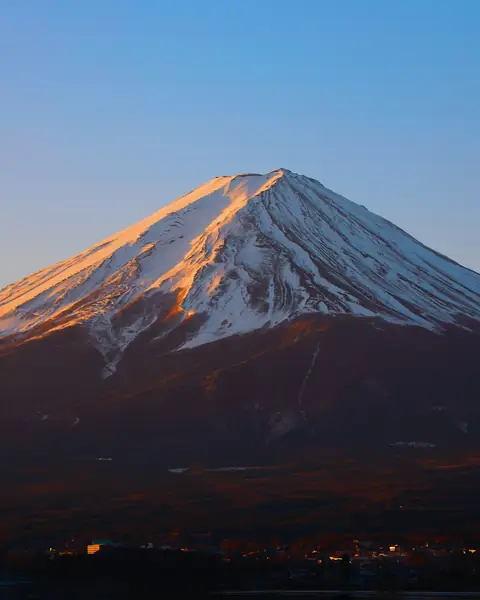
Mount Fuji (3,776 m) is Japan's highest mountain and a symbol of the country. The volcano rises alone above the plains southwest of Tokyo, and its UNESCO World Heritage listing recognises it as a sacred place and a source of artistic inspiration.
Four main trails climb the mountain: Yoshida, Subashiri, Gotemba and Fujinomiya. Most people start from a 5th Station, the highest road-accessible point on each trail, and take five to seven hours to reach the summit, often hiking overnight to see the sunrise. Mountain huts provide basic beds and meals and must be booked ahead.
Highlights
- Sunrise from the summit crater rim
- The mountain huts and the night climb under the stars
- Views of Fuji from the Five Lakes below
- The Yoshida Trail, the most popular route, with huts and facilities
Best time to visit
The official climbing season runs from early July to early September, when the trails are staffed and huts are open. Outside this period trails are not maintained and conditions can be dangerous. Visitors who prefer views to climbing can see Fuji year-round from the Five Lakes area, often with the clearest skies in winter.
- JanJanuary: Not ideal
- FebFebruary: Not ideal
- MarMarch: Not ideal
- AprApril: Not ideal
- MayMay: Not ideal
- JunJune: Not ideal
- JulJuly: Best
- AugAugust: Best
- SepSeptember: Good
- OctOctober: Not ideal
- NovNovember: Not ideal
- DecDecember: Not ideal
● Best · ○ Good · blank: not ideal. Conditions vary by year, so check local forecasts and access before you go.
Getting there
Fly to Tokyo Haneda (HND) or Narita (NRT). From Tokyo, highway buses reach Kawaguchiko in about two hours, and from there seasonal buses run to the Yoshida Trail 5th Station. Other trails are reached from the Shizuoka side.
What to expect
Moderate: non-technical but long, steep and cold. Altitude, wind and rapidly changing weather affect many climbers, and the summit can be near freezing even in July.
Practical tips
- Book mountain huts well ahead, and check the official reservation, fee and daily-limit rules for your chosen trail.
- Climb slowly, and avoid bullet climbing, which means going overnight without a rest at a hut.
- Carry warm layers, rain gear, a headlamp, water and cash for the huts.
- Check the daily weather and trail status before starting.
Frequently asked questions
When can I climb Mount Fuji?
The official season is from early July to early September. Check the official climbing website for exact dates and rules each year.
How long does the climb take?
Most people take five to seven hours up and three to five hours down from the 5th Station, depending on the trail and pace.
Official sources
Rules, fees, permits and conditions change. Check the official pages below before you travel.
- Official Mt. Fuji climbing website
- Japan National Tourism Organization
- UK government travel advice: Japan
Last reviewed October 2026. Details are for planning only and can change; confirm access, permits and conditions with official sources before you travel. Spotted something out of date? Tell us. Photography: Aditya Anjagi on Unsplash.


