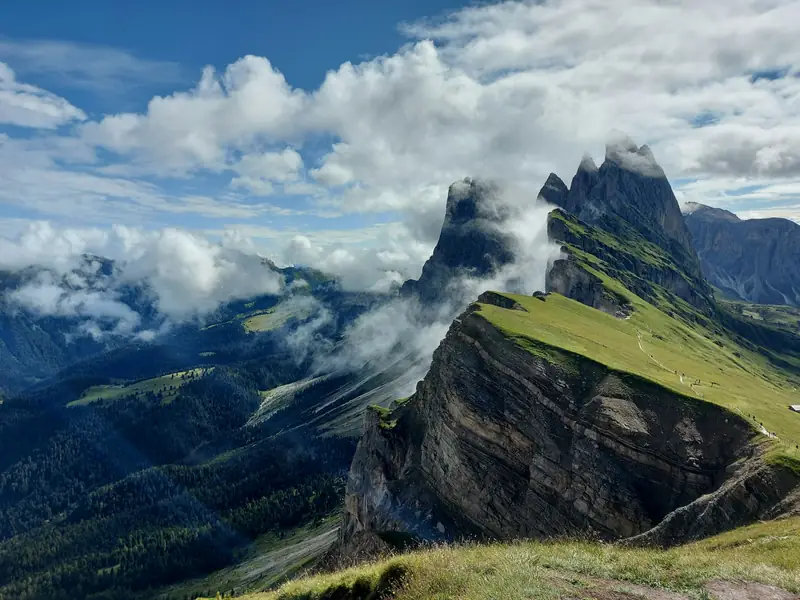
Staying overnight in the mountains is one of the great pleasures of walking: you wake up already high, the paths are quiet in the early light, and a hot meal waits at the end of the day. Huts make multi-day trips possible without carrying a tent. They work differently around the world, though, so here is what to expect.
Alpine huts
Huts in the Alps go by many names: rifugio in Italy, refuge in France, Hütte in Austria, Germany and Switzerland. Many are run by national alpine clubs, and some are private.
- Season. High huts are usually staffed from about late June to mid-September. Outside the season, some keep a small unlocked room for emergencies, but you cannot count on food, beds or heating.
- Half board. The normal arrangement is a bed in a dormitory, an evening meal and breakfast. Lunch and drinks are extra.
- Booking. Reserve ahead for popular routes and for July and August. If your plans change, cancel: huts hold beds for you, and a missing guest can trigger a search.
- Sleeping. Expect bunks or shared mattresses, wool blankets and a quiet-hours rule from about 10 pm. Boots come off at the door, and many huts lend soft shoes.
- Payment. Bring cash. Some huts take cards, but not all, and the signal for a card reader can fail.
- Discounts. Members of national alpine clubs often get cheaper beds at partner clubs' huts. Ask your own club about reciprocal rights.
Himalayan teahouses
In Nepal, trekking lodges are known as teahouses. They are small, family-run guesthouses along the main trails.
- Rooms are simple, usually twin beds with a mattress and a pillow, and often unheated.
- The dining room is typically the only warm space, heated by a stove. Meals come from a menu, with dal bhat (rice, lentils and vegetables) a favourite, and prices rise with altitude because everything is carried up.
- Extras such as hot showers, charging devices and Wi-Fi are usually paid for separately.
- Booking is rarely needed off-peak, but lodges fill in the busiest weeks of spring and autumn, so a guide or agency often arranges rooms in advance.
Bring a warm sleeping bag, because blankets are not always enough on cold nights.
Patagonia and other regions
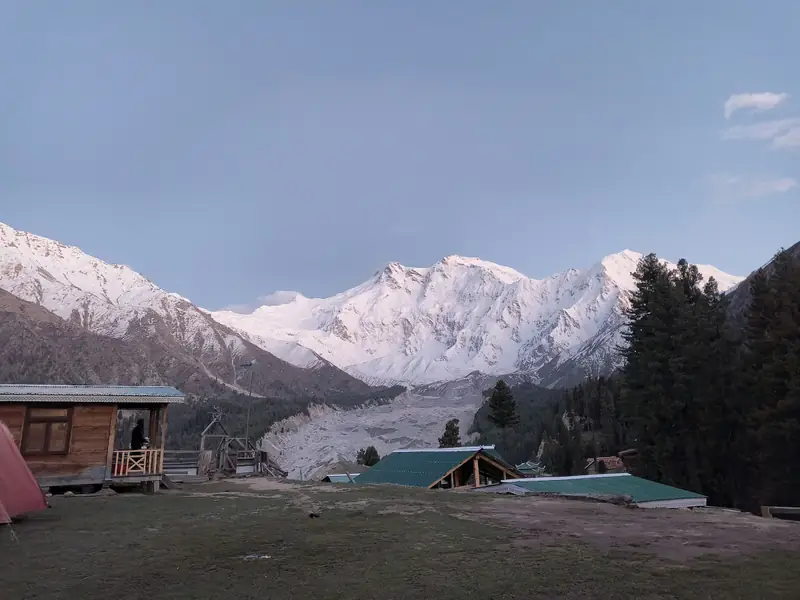
In Torres del Paine in Chile, refuges and campsites are run by private companies, and the popular routes need to be booked well in advance. At Fairy Meadows in Pakistan, wooden cabins offer basic beds and meals at about 3,300 m. In Norway, DNT cabins form a network across the country, with different rules for staffed, self-service and unstaffed cabins.
What to pack
- a lightweight sleeping-bag liner (many huts require your own, or sell one)
- earplugs, because dormitories can be noisy
- a headlamp, so you can move around without waking others
- a quick-drying towel and a small wash kit
- cash in the local currency
- a power bank, since dormitories rarely have outlets
Good hut manners
Arrive in daylight if you can, tell the host if you will be late, and keep to quiet hours. Pack your gear tidily, take your rubbish with you where there is no collection, and be kind to the people who carried the supplies up the mountain. A hut is a shared home for the night.
Sources and further reading
- Swiss Alpine Club
- Club Alpino Italiano
- Fédération française des clubs alpins et de montagne
- Norwegian Trekking Association (DNT)
Written by the LuxPines editorial team and last updated 24 October 2026. Conditions, prices and rules change, so confirm details with official sources before you travel. See how we work and our affiliate disclosure.