Overview
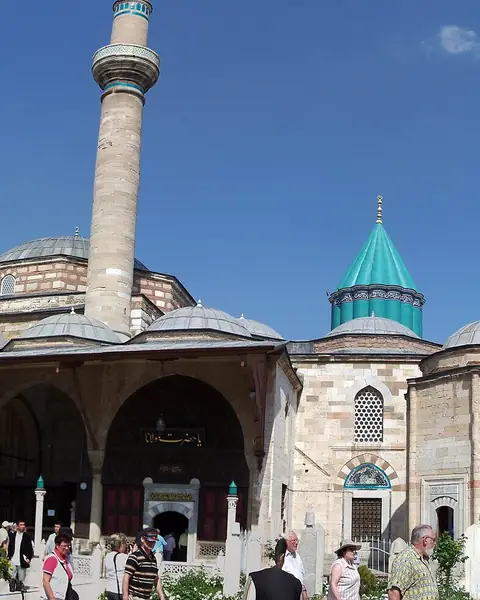
Konya, in the middle of the Anatolian plateau, was the capital of the Seljuk Turks in the 12th and 13th centuries, and it is the burial place of Mevlana Celaleddin Rumi, the Persian poet and mystic whose followers founded the Mevlevi order, the whirling dervishes. His tomb, covered by a distinctive turquoise-tiled dome, lies inside the Mevlana Museum, a complex of dervish cells, prayer halls and courtyards that draws visitors from across the world.
The city also has fine Seljuk buildings, such as the Alaeddin Mosque and the Karatay Madrasa with its tile museum, and a busy bazaar. The whirling ceremony, the sema, is performed in the evening at cultural centres, particularly on Saturdays, and the Şeb-i Arus festival in December marks the anniversary of Rumi's death. Çatalhöyük, a Neolithic site that is a UNESCO World Heritage Site, lies about an hour away.
Highlights
- The Mevlana Museum and its turquoise dome
- A whirling dervish ceremony
- Seljuk monuments such as the Alaeddin Mosque and Karatay Madrasa
- Çatalhöyük, the Neolithic town
Best time to visit
April to October is the best time, with warm, dry days. Summer is hot, and winter is cold, although December has the annual festival. Visit the museum early to avoid queues, and dress modestly.
- JanJanuary: Not ideal
- FebFebruary: Not ideal
- MarMarch: Good
- AprApril: Best
- MayMay: Best
- JunJune: Good
- JulJuly: Not ideal
- AugAugust: Not ideal
- SepSeptember: Best
- OctOctober: Best
- NovNovember: Good
- DecDecember: Not ideal
● Best · ○ Good · blank: not ideal. Conditions vary by year, so check local forecasts and access before you go.
Getting there
Fly to Konya (KYA) or Ankara (ESB). A high-speed train links Ankara and Istanbul with Konya in about 2 to 4 hours. Local taxis and trams reach the museum. Buses connect Konya with Cappadocia and the coast.
What to expect
The museum is a place of pilgrimage, so dress modestly, women cover their hair in the tomb area, and shoes come off. Queues can be long on weekends and holidays. The sema performances are a spiritual practice as well as a show, so keep silent and do not applaud.
Practical tips
- Dress modestly for the museum and carry a scarf.
- Watch the sema respectfully, without flash or talking.
- Visit early on weekdays to avoid queues.
- Combine with Çatalhöyük if you have a day.
Frequently asked questions
What is the sema?
The ceremony of the whirling dervishes, a form of worship in which dancers turn to music and chanting.
Can I see a ceremony?
Yes, performances are held in the evenings, especially on Saturdays. Book in advance.
Is it far from Cappadocia?
About three hours by road.
Official sources
Rules, fees, permits and conditions change. Check the official pages below before you travel.
- Türkiye Tourism Promotion and Development Agency (Go Türkiye)
- Republic of Türkiye e-Visa
- UK government travel advice: Turkey
Photos


Last reviewed October 2026. Details are for planning only and can change; confirm access, permits and conditions with official sources before you travel. Spotted something out of date? Tell us. Photography: Niels Elgaard Larsen (CC BY-SA 3.0) via Wikimedia Commons, Giorgio Galeotti (CC BY-SA 4.0) via Wikimedia Commons, Giorgio Galeotti (CC BY-SA 4.0) via Wikimedia Commons.


